AI & Robotics for Wildlife Ecology & Conservation
It is an incredibly exciting time to be a behavioral ecologist, as technological innovations are opening doors to new research directions and allowing us to explore previously intractable questions. My research pushes the bounds of what is possible using existing methods, and thereby motivates further innovation. See my perspectives piece on machine learning for wildlife conservation here, and a piece on the potential for biohybrid methods in animal behavior here. I have also spoken at a number of robotics and computer vision conferences (recordings here, here and here). Read on below to learn about the collaborative projects I’ve led and contributed to at the nexus of wildlife ecology, robotics, and computer science.
HerdHover: Drone-based methods for behavioral ecology field studies
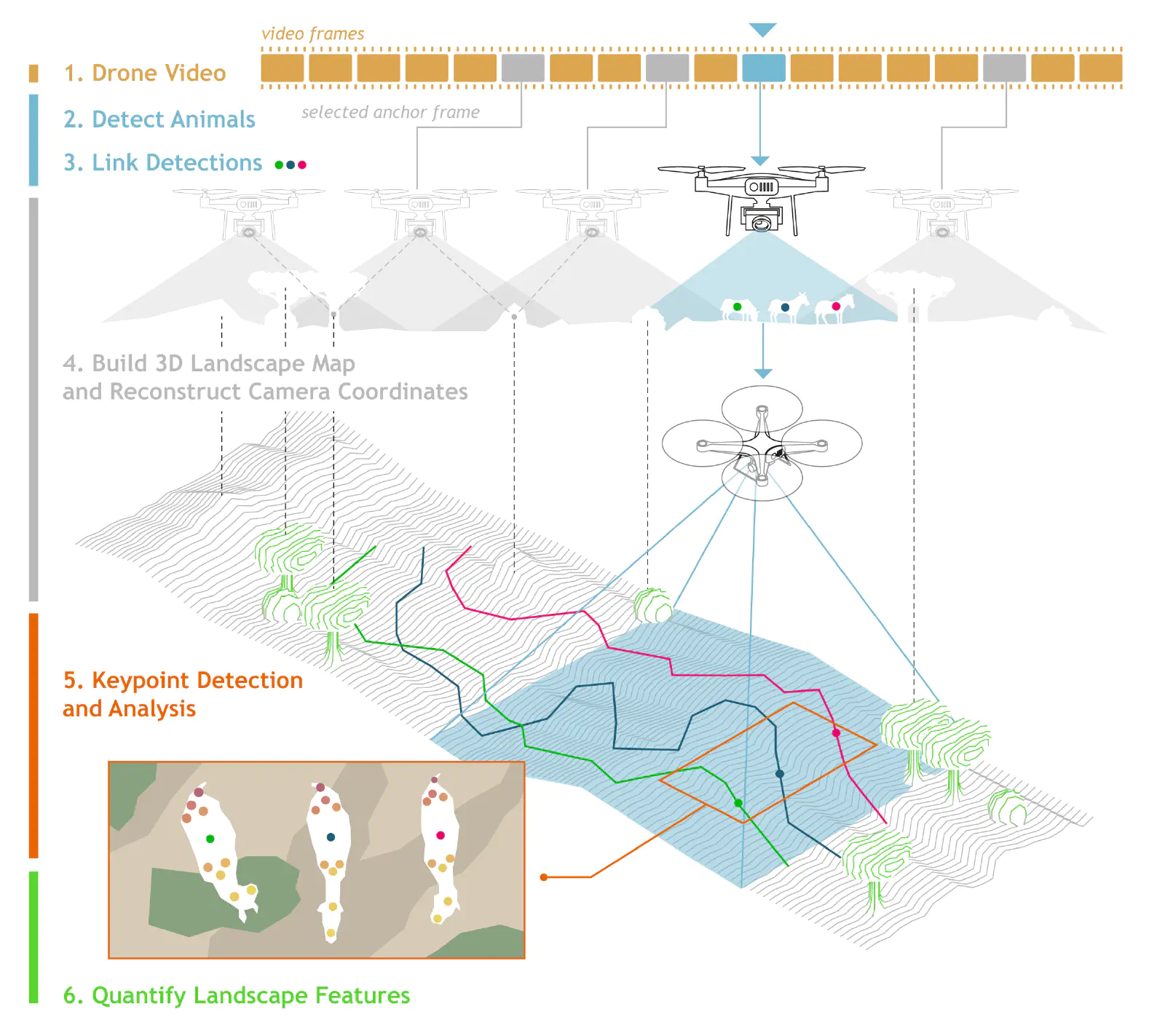
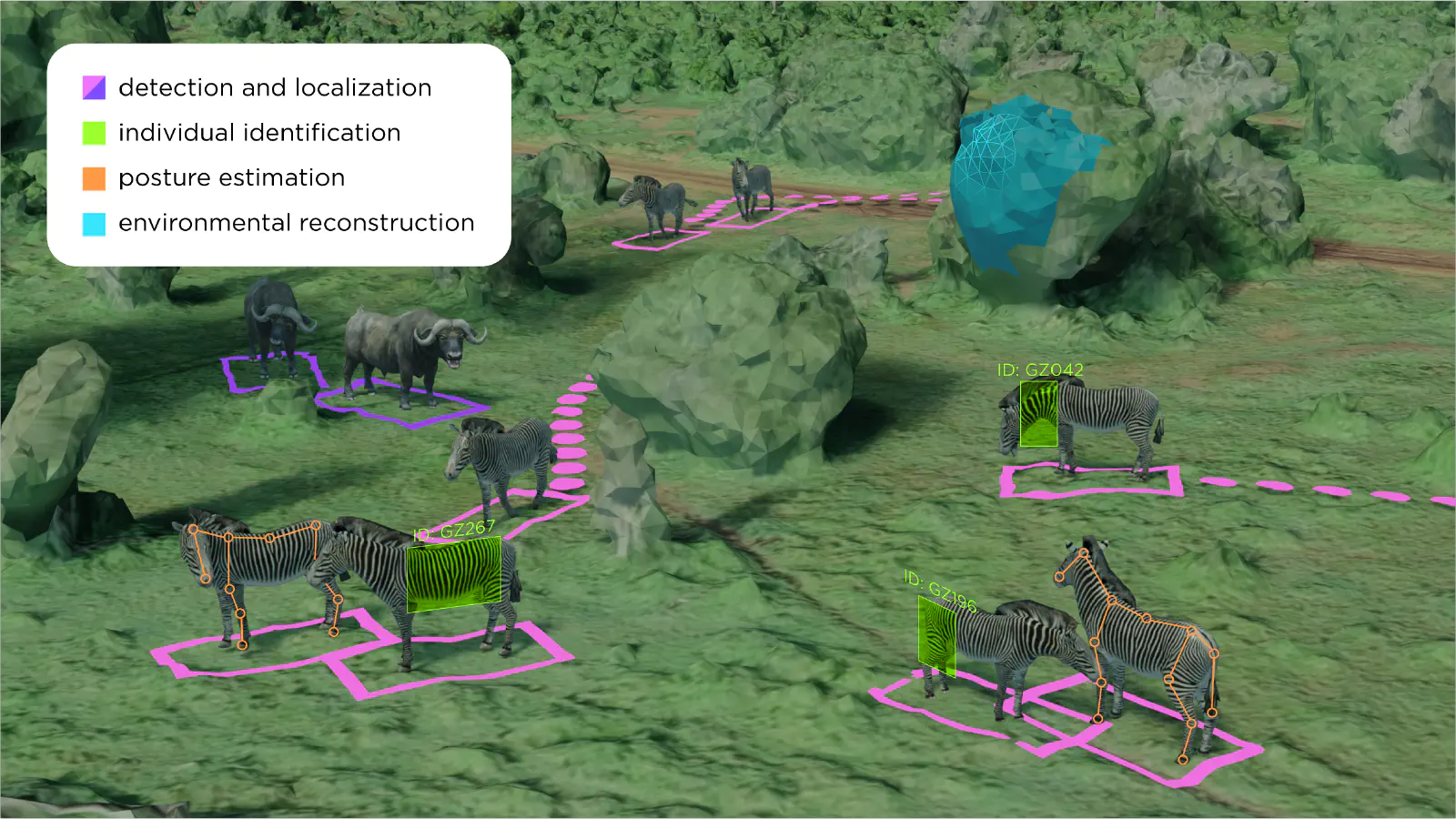
Studying complex behavioral processes in natural settings requires high-resolution data on the behavior of entire groups of animals simultaneously, as well as information on the environmental context in which interactions occur. For many systems, it is not possible to collect these datasets using conventional methods or bio-logging approaches. In this project, we developed methods for drone-based observation of free-ranging, unmarked animals and a pipeline for extracting high-resolution data on animal behavior, movement, and habitats from the resulting footage. You can learn more about our method from our Research Methods Guide, published open access in the Journal of Animal Ecology. Please visit the Herd Hover website to learn more about this project.
WildDrone: Autonomous Drones for Nature Conservation Missions
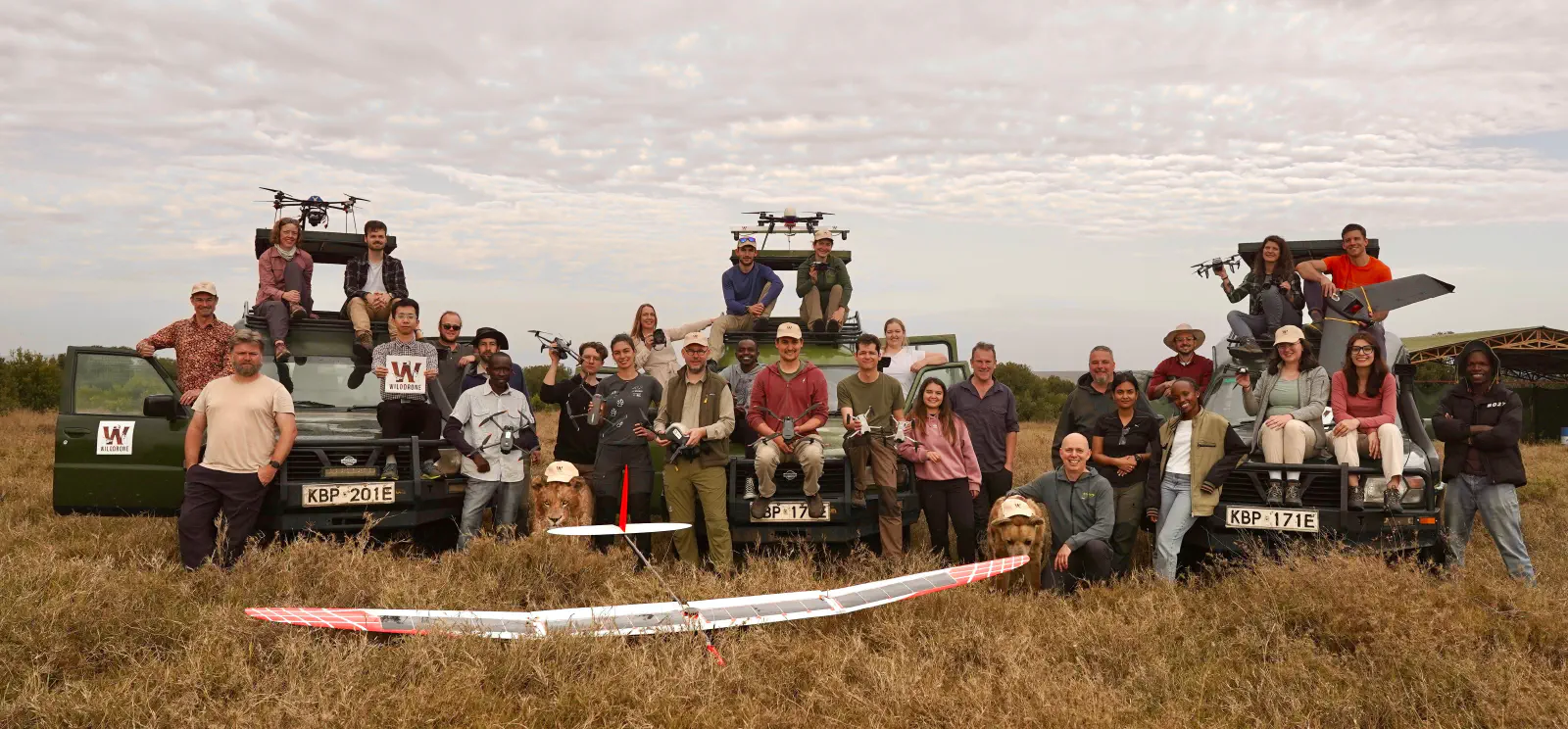
WildDrone is an international training network funded by the EU Marie Sklodowska Curie Actions. We aim to revolutionize wildlife conservation practices by using autonomous drone technology as a unifying platform to monitor wildlife populations, track their movements, and manage human-wildlife conflicts. The Consortium includes researchers and collaborators from 19 partner organizations in Europe and Africa. We are collectively training 13 interdisciplinary PhD students across the fields of behavioral ecology, wildlife conservation, computer vision, and aerial robotics. I lead the Wildlife Ecology Theme as a member of the core project leadership. For more information, please see the official project site.
WildBotics: Autonomous Sampling with Robotics in the Wild for Nature Conservation
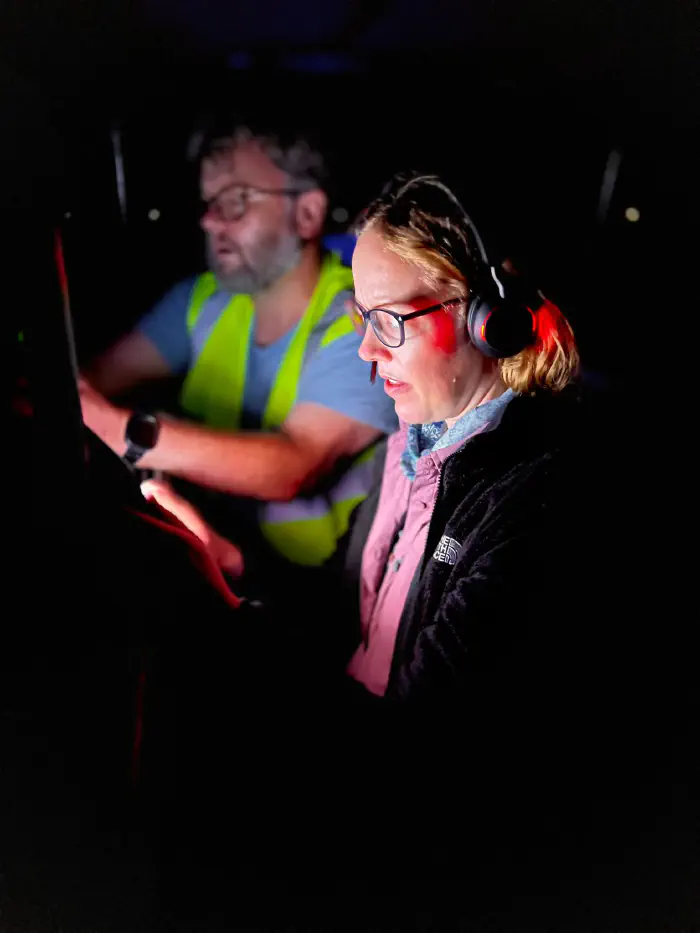
Like WildDrone, WildBotics is an EU-funded Marie Sklodowska Curie training network. It builds on WildDrone by expanding focus to include terrestrial and aquatic robots in addition to drones, and expanding sample collection to include audio data and physical samples as well as imagery. The project will run from January 2026 through 2029. Recruitment for PhD positions on the project is currently under way on the WildBotics website - deadline January 7!
Image-based tracking for counting mobile animal groups
Counting large, mobile animal groups is a challenging task. Yet, reliable population estimates are key to effective conservation and population management. We have leveraged image-based tracking to count animals in GoPro footage to estimate the size of a migratory population of straw-colored fruit bats at Kasanka National Park in Zambia. I used similar methods to count the largest-documented “megaherd” of African buffalo in Botswana.
Image-based methods for behavioral studies
My research has provided scientific motivation and supporting data for new image-based methods for behavioral studies. These include DeepPoseKit, a software toolkit for animal pose estimation, which was the first application of posture tracking to drone footage; MammalNet, a large-scale benchmark dataset for animal and behavior identification; and FERAL, a method for interpreting animal behavior states directly from videos.