Movement Ecology of Ungulates and their Predators
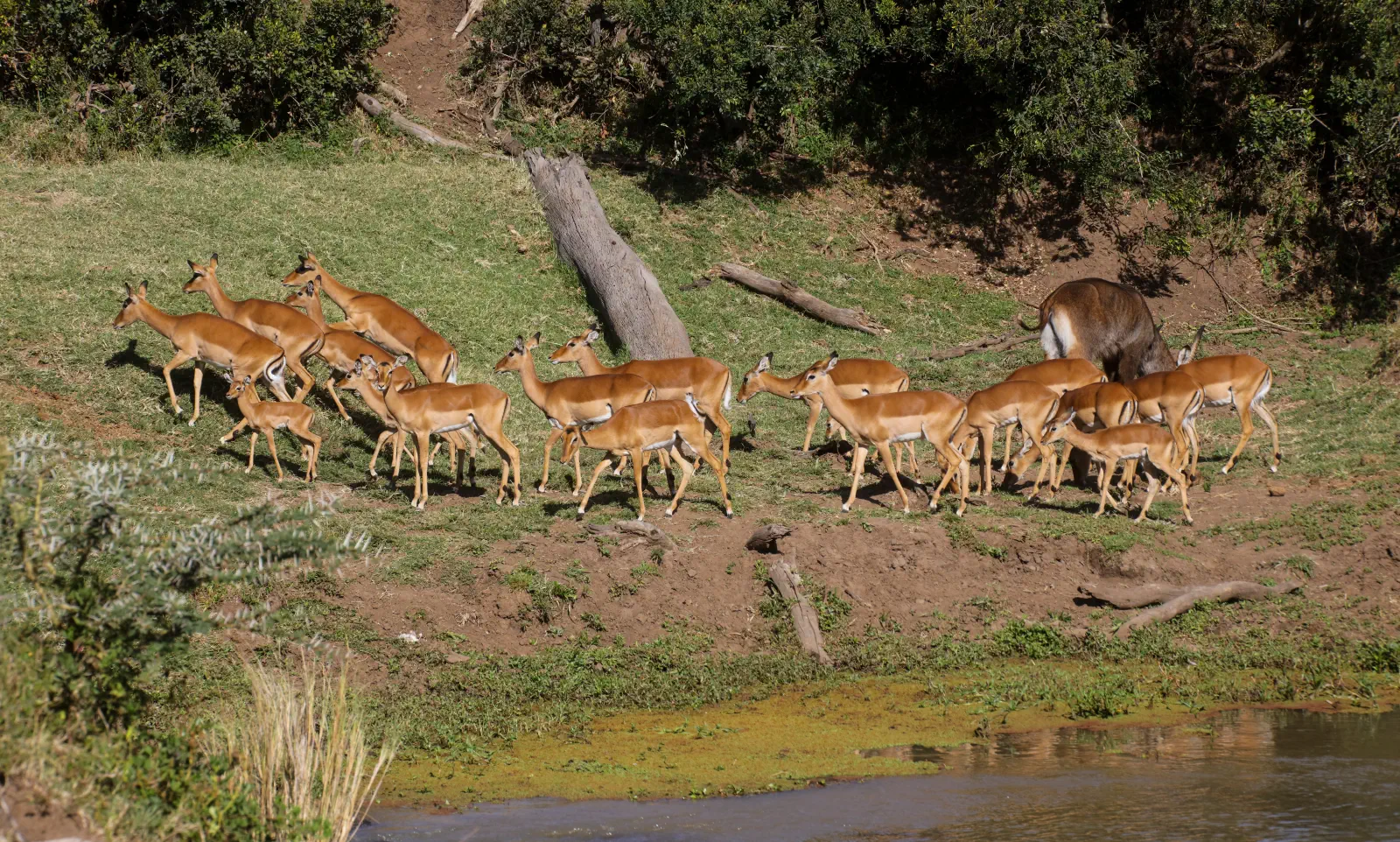
Animal movement is a fundamental force underlying a broad range of ecological processes. Animal movement decisions are shaped by local environmental and social conditions –– variables that are often difficult to capture via bio-logging approaches alone. My group leverages drone-based tracking to study animal movement in context by generating high-resolution movement trajectories for entire animal groups paired with contemporaneous landscape imagery. This approach allows us to uncover the factors driving animal movement at fine scales, and better understand the role of animal movement in mediating ecological phenomena.
Fine-scale Movement of Ungulate Herds
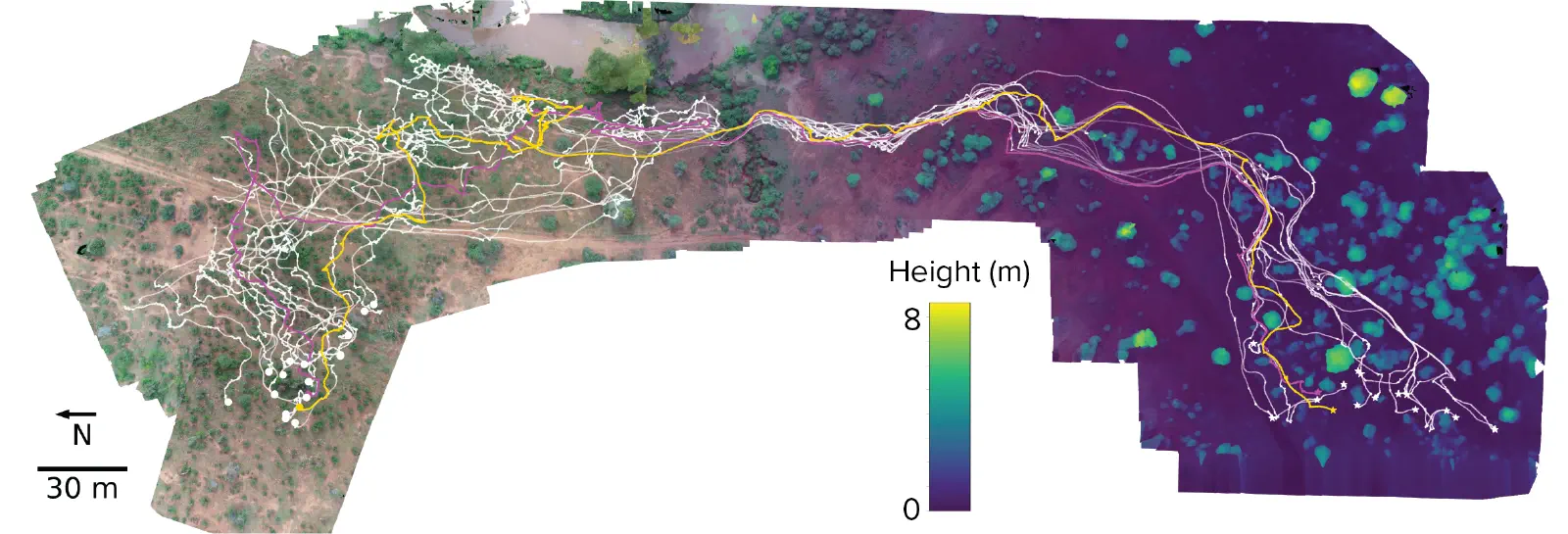
I am using drone-derived movement and image data and customized step-selection models to explore the influence of environmental and social factors on fine-scale movement of zebra herds through savanna environments.
Lion Movement Through Prey Landscapes
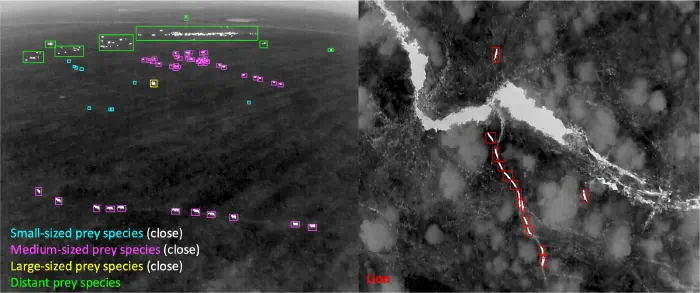
We are using thermal drones to survey prey landscapes at night and track collared lions as they move through these landscapes to understand how prey presence and predator-prey interactions influence lion hunting and movement decisions. This project is led by Elena Iannino as part of her PhD, and is part of the WildDrone Project.